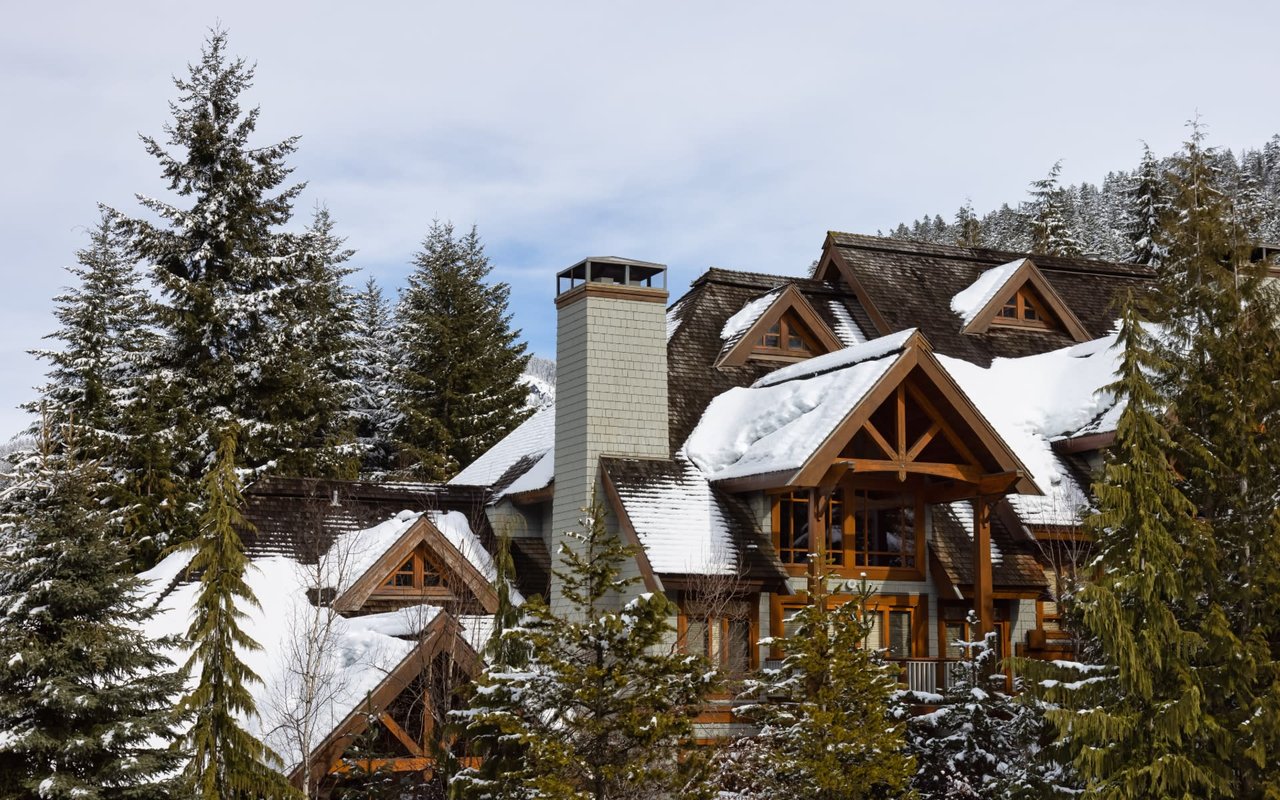
A buyer looking at a four-bedroom cabin off County Road 5 sees exactly what you'd expect in a mountain rental listing.
Sleeps 12.
There's a bunk room downstairs. A sofa bed in the loft. Enough room for two families to split a ski week. Pull up a rental calendar, pencil in Presidents' Day weekend and spring break, and the income calculation starts looking pretty good.
Then there is the number buried in a completely different piece of paperwork:
Four bedrooms.
If that home is on septic, that number may matter considerably more than how many beds fit inside it.
Because in unincorporated Grand County, the number of people a short-term rental can legally advertise isn't determined simply by square footage, bunk beds or what the previous owner managed to squeeze into the loft.
The septic system gets a vote.
And it votes conservatively.
The Short Answer: How Does Septic Affect STR Occupancy in Grand County?
For short-term rentals in unincorporated Grand County that use an onsite wastewater treatment system, or OWTS, maximum occupancy is limited by the septic system's design capacity. Grand County's STR guidance describes that limit as two people per bedroom plus two additional occupants.
That means a four-bedroom septic-served home would generally calculate to 10 occupants, not 12.
A five-bedroom system would calculate to 12.
And adding another bunk bed doesn't change either number.
That's an important distinction for buyers evaluating short-term rental income in places like Tabernash, Pole Creek, Meadow Creek and other unincorporated areas of Grand County.
Because the number advertised in the real estate listing and the number you can legally advertise to vacation renters are not necessarily the same thing.
The $1,200 Fee Isn't What Gives You 12 Guests
Most of Tabernash is outside an incorporated town boundary, which means many properties fall under Grand County's short-term rental regulations rather than those of Winter Park, Fraser or another municipality.
Grand County's current STR permit fee is unusually straightforward:
$100 per advertised occupant, per year.
Advertise for eight guests? $800.
Ten guests? $1,000.
Twelve guests? $1,200.
The county's overall maximum occupancy is 16.
But here's the part a buyer can easily misunderstand:
Paying a permit fee for 12 occupants doesn't create the right to advertise for 12 occupants.
The property has to qualify for that occupancy first.
For a home served by septic, Grand County's regulations further restrict occupancy according to the OWTS system's capacity.
So if you're analyzing a four-bedroom Tabernash cabin that is marketed as “sleeps 12,” the useful question isn't:
What would the STR permit cost me?
It's:
What occupancy will Grand County actually approve?
Those are two very different questions.
Your Septic Permit May Be More Important Than the Bunk Room
This is where a fairly boring county record suddenly becomes an investment document.
Grand County's STR FAQ explains the septic limitation using a design-capacity calculation of two people per bedroom plus two additional occupants.
For a buyer, that creates a very simple first-pass calculation:
Septic Design | General STR Occupancy Calculation |
|---|---|
2 bedrooms | 6 guests |
3 bedrooms | 8 guests |
4 bedrooms | 10 guests |
5 bedrooms | 12 guests |
6 bedrooms | 14 guests |
7+ bedrooms | Up to the countywide 16-person maximum |
The important phrase there is septic design.
Not necessarily the bedroom count written in the MLS.
Not the number of rooms a seller currently uses for sleeping.
Not the number of mattresses in the house.
The underlying OWTS records tell you what the wastewater system was designed to serve.
And that creates one of those wonderfully unglamorous Grand County due-diligence questions that can matter a great deal more than the countertops:
What does the septic permit say?
Why “Sleeps 12” Can Change the Investment Math
Imagine two otherwise similar four-bedroom Tabernash homes.
Both photograph beautifully.
Both have enough physical sleeping space for 12.
Both are close enough to Winter Park that a vacationing family would happily consider them.
But one can legally advertise for 12 guests and the other, because of its septic capacity, can advertise for only 10.
That two-person difference doesn't sound enormous until you think about who books four-bedroom mountain homes.
A group of eight can fit comfortably in either.
A group of 10 probably can too.
But the second family bringing three kids instead of one?
The grandparents joining Christmas week?
Two families looking specifically for a house that accommodates everyone under one roof?
Suddenly the search filters matter.
A property appearing in “sleeps 12” searches and a property capped at 10 aren't necessarily competing for exactly the same bookings.
That's why occupancy belongs in the investment analysis before a buyer decides what the property's rental income justifies paying for it.
The legal guest count isn't just a compliance issue.
It's part of the asset's revenue potential.
And No, the County Doesn't Automatically Solve This at Closing
Here's the second part buyers should know.
Grand County does not currently operate a mandatory septic transfer-of-title inspection program.
In other words, the county isn't automatically requiring the septic system to undergo a transfer inspection simply because a property is being sold.
That puts more responsibility on the buyer's due diligence.
If you're purchasing a home on septic, particularly one where short-term-rental income is part of the reason you're buying it, this isn't something I'd leave until after closing.
I'd want to understand both:
What was the system designed for?
and
What condition is it actually in?
Those are related questions, but they're not the same question.
A septic inspection can tell you about the physical condition and operation of the system.
The county's permit and OWTS records can tell you what the system was approved and designed to serve.
For an STR buyer, you want both pieces of information.
What I'd Check Before Writing the Offer
If rental income is part of the reason you're considering a property around Tabernash, this is one of those situations where ten minutes of research can change the questions you ask during negotiations.
First, confirm the jurisdiction. An address that gets marketed as “Winter Park,” “Fraser” or “Tabernash” doesn't necessarily tell you which government regulates its STR operation. Confirm whether the parcel is inside municipal boundaries or unincorporated Grand County.
Second, pull the septic records. Look for the permitted bedroom count and design information rather than relying on the home's current sleeping configuration.
Third, compare that number with the advertised occupancy. If the listing says “sleeps 12” but the septic documentation points toward an STR occupancy of 10, don't build your revenue projection around 12-person bookings until you've confirmed the discrepancy.
Fourth, inspect the system. Grand County isn't doing a mandatory transfer-of-title inspection for you. Make septic inspection part of your own due diligence where appropriate.
Fifth, check the HOA or subdivision rules too.
And finally:
Don't assume an existing STR operation means you'll automatically be able to operate the property exactly the same way.
Verify it.
That's the difference between buying a mountain home that has been rented and buying one whose rental economics you've actually underwritten.
What If the Septic System Is Too Small?
That doesn't necessarily kill the deal.
But it changes the deal.
Grand County requires permits for new septic systems, upgrades, replacements and most repairs. Current county requirements call for an engineered and stamped OWTS design prepared by a Colorado-registered professional engineer, submitted through the county's permitting process. A Declaration of Covenants is also part of the permit process and is recorded with the Grand County Clerk.
So yes, changing or upgrading a system may be possible.
But that's not something I'd casually plug into a pro forma as:
We'll just upgrade the septic later.
Before assigning additional future rental income to that idea, you'd want to know whether the site can physically accommodate the appropriate system, what an engineer recommends, what county approval requires and what the project will cost.
On a mountain property, dirt is rarely just dirt.
The Larger Lesson for Tabernash Buyers
This is exactly why I don't love evaluating Grand County investment properties from listing sheets alone.
The listing tells you there are four bedrooms.
The photos show you 12 places to sleep.
The rental projection tells you what 12-person ski weeks might generate.
And buried somewhere else is an old septic record that may tell you the property can legally advertise for 10.
None of those documents is necessarily lying.
They're answering different questions.
The buyer's job is figuring out how the answers fit together before putting a price on the property.
That's especially true around Tabernash, where wells, septic systems, county roads, subdivision covenants, wildfire considerations and jurisdiction lines can materially change how two houses that look nearly identical on Zillow actually function.
The best mountain real estate decisions aren't made by chasing the number on the listing.
They're made by understanding the place underneath it.
And sometimes, quite literally, that means understanding what's buried in the yard.
Frequently Asked Questions About Tabernash STRs and Septic Systems
How many people can a short-term rental sleep in unincorporated Grand County?
Grand County caps STR occupancy at 16 people. Properties served by an onsite wastewater treatment system are further restricted according to the septic system's design capacity. The county's STR guidance describes the calculation as two occupants per bedroom plus two additional occupants.
How much does a Grand County short-term rental permit cost?
For properties governed by unincorporated Grand County, the current annual permit fee is $100 per maximum advertised occupant. A property permitted for 10 guests would therefore have a $1,000 permit fee.
Can a four-bedroom Tabernash STR sleep 12?
Not necessarily. If the property is served by septic and the OWTS is designed for four bedrooms, Grand County's occupancy formula would generally result in a 10-person STR occupancy limit. Buyers should verify the property's actual permit and septic records rather than relying on the listing's advertised sleeping capacity.
Does Grand County require a septic inspection when a house is sold?
Grand County does not currently operate a mandatory transfer-of-title OWTS inspection program. Buyers should consider septic condition and permit records as part of their own property-specific due diligence.
Can I upgrade a septic system to increase STR occupancy?
Potentially, but feasibility is property-specific. Grand County requires engineered plans and permitting for OWTS upgrades and replacements. Buyers considering an upgrade should confirm site feasibility, engineering requirements, county approval and costs before assuming a higher future occupancy.
Are Tabernash short-term rentals regulated by the Town of Winter Park or Fraser?
Many Tabernash properties are in unincorporated Grand County and therefore fall under county STR regulations. Jurisdiction should be confirmed for the specific parcel rather than inferred from the mailing address, listing description or proximity to Winter Park and Fraser.
If you're considering a Tabernash, Pole Creek or Fraser Valley property partly for its rental potential, the income projection is only as useful as the assumptions underneath it.
Our team works Grand County real estate from the ground up—sometimes literally. From land and septic considerations to STR regulations and long-term property strategy, local details can materially change what a property is worth to a particular buyer.
Before you build an offer around the number on the listing sheet, let's make sure we're looking at the numbers underneath it.
This article is general information, not legal, tax or financial advice. Consult a qualified professional about your situation.